The Real Reason Restaurant Steaks Taste Better Than Yours
It's not the cut or the seasoning. Here's the science behind why steakhouse crust forms and why most home kitchens can't quite reach it.
Order a steak at a good steakhouse, and the first thing you notice is the crust. Deep brown, almost black at the edges, with a snap before the knife even reaches the meat. Cook the same cut at home, follow the same seasoning, and the crust rarely shows up the same way. The difference is not the seasoning or even the cut. It comes down to heat, and most home kitchens cannot reach the heat a steakhouse uses without trying.
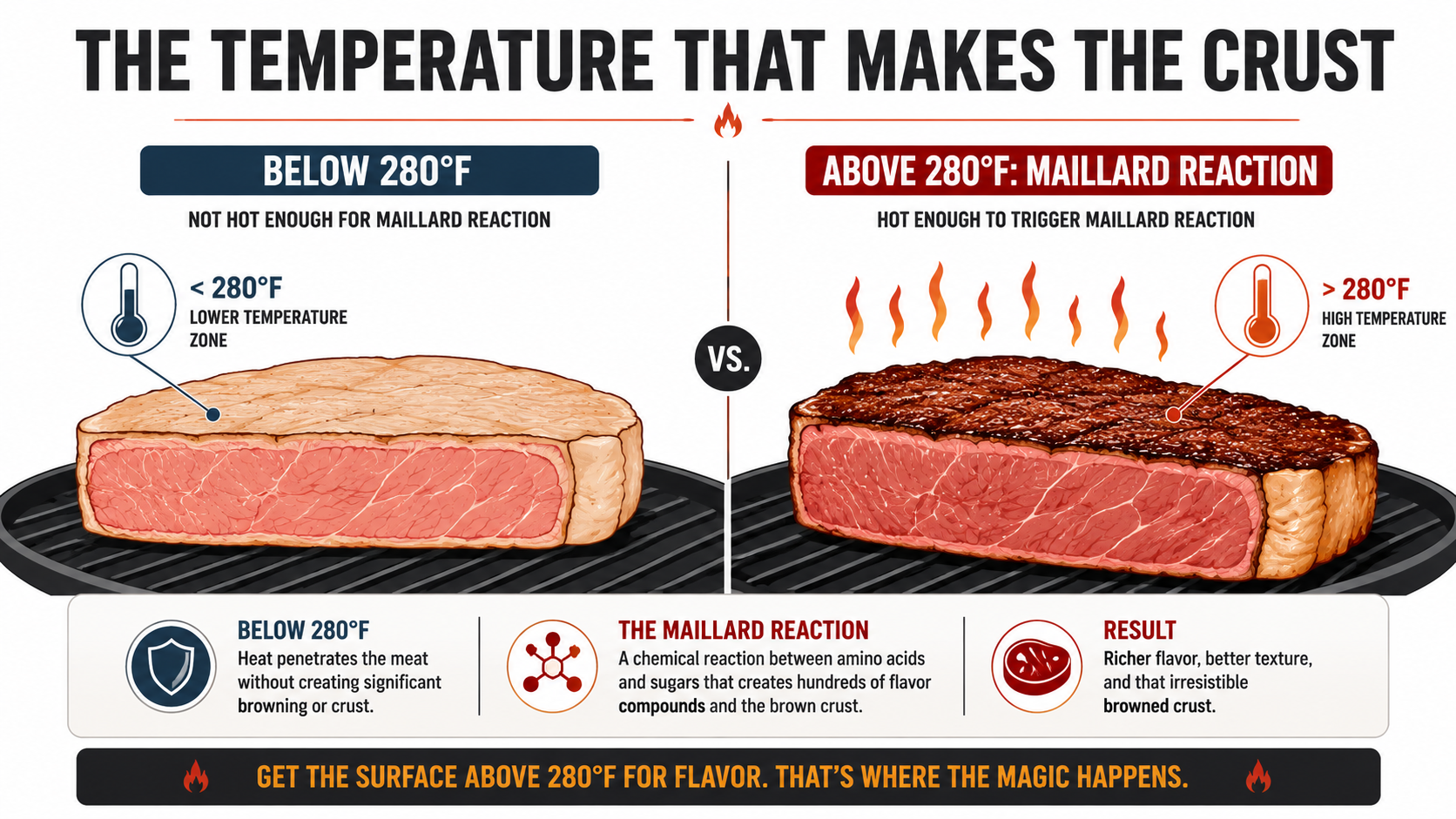
That crust has a name. It is the result of the Maillard reaction, a chemical process between amino acids and sugars that only kicks in once the surface of the meat gets hot enough.
The Maillard Reaction: Why Heat Creates Better Flavor
The Maillard reaction requires the surface of the meat to reach roughly 280 degrees Fahrenheit. Below that threshold, the meat can still cook through, but it will not develop the same crust, color, or flavor compounds. This is not a matter of cooking longer at a lower temperature. The reaction is temperature dependent, not time dependent, so a steak cooked gently for twenty minutes at a moderate heat will never brown the way a steak seared hard for ninety seconds does.
Why Surface Moisture Prevents a Good Sear
Before a steak can brown, any surface moisture has to evaporate. Water boils at 212 degrees Fahrenheit, which means a wet steak surface gets stuck at that temperature until the moisture is gone. Every second spent evaporating water is a second not spent browning.
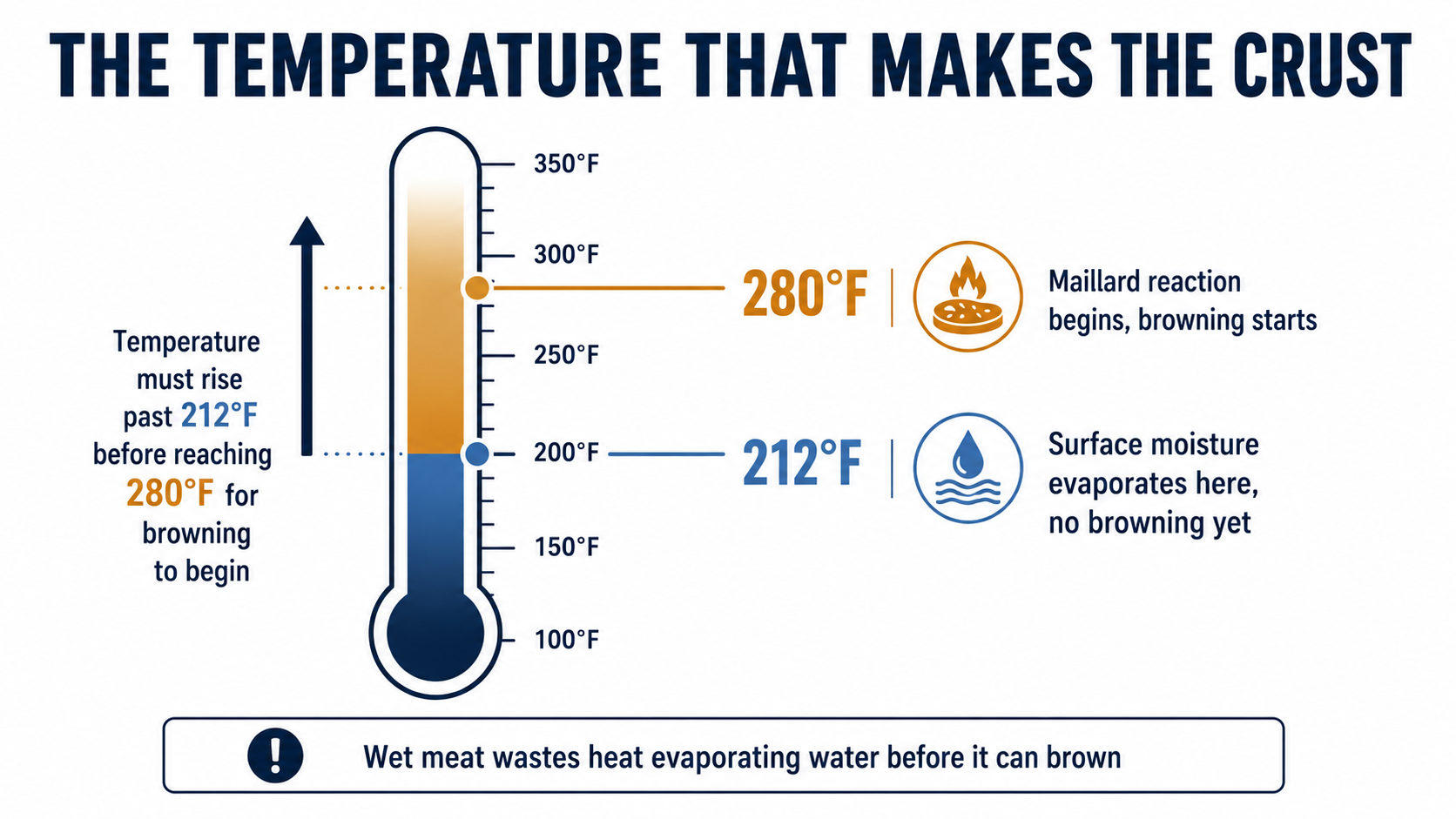
This is why recipes insist on patting steaks dry before searing. Skipping that step does not ruin the steak, but it does force the pan or grill to do extra, wasted work before the real searing can begin. For readers interested in the science behind safe meat preparation, the USDA Food Safety and Inspection Service explains recommended cooking temperatures and handling practices for beef, helping separate food safety guidance from cooking techniques.
Why Restaurant Equipment Produces Better Crust
A typical home stovetop burner tops out well below what a commercial setup can sustain, and even a hot pan loses heat fast the moment a cold steak touches it. Professional kitchens get around this with equipment built to hold extreme heat steady, not just reach it briefly. Salamander broilers and radiant broilers used in commercial kitchens are designed around exactly this problem, delivering intense, direct heat that does not drop the instant food is added.
This is also the entire premise behind specialty high-heat searing equipment built for serious home cooks. When preparing premium cuts like those from Bo Jackson Signature Foods, using a high-performance infrared ceramic burner allows the cooking surface to pass temperatures of 1,500 degrees Fahrenheit almost instantly.
Why High Heat Outperforms Longer Cooking
A steak cooked at moderate heat for a long time and a steak seared hard for a short time can finish at the same internal temperature, but they will not look or taste the same. The slow version risks what is sometimes called the gray band, an overcooked layer just under the crust caused by prolonged exposure to heat before the crust has even fully formed.
A short, intense sear avoids that almost entirely because the high heat does its job before the heat has time to travel deep into the meat. Understanding the mechanics of heat transfer in meat helps explain why prolonged exposure often produces a thicker gray band beneath the crust while rapid searing keeps more of the interior at the desired doneness.
The Equipment Professional Kitchens Use
Steakhouses are not guessing their way into a better crust. They are using equipment engineered to stay at a searing temperature through nonstop service. Restaurants achieve this consistency because their kitchens rely on equipment engineered for sustained, high-output heat. Commercial broilers are specifically engineered to recover heat almost immediately after food is placed on the cooking surface, allowing chefs to produce a consistent crust throughout busy service.
Home Kitchen vs. Steakhouse Equipment
The differences between residential and commercial cooking equipment become much easier to understand when compared side by side.
| Feature | Typical Home Kitchen | Professional Steakhouse |
|---|---|---|
| Maximum surface heat | Moderate | Extremely high |
| Heat recovery | Slower | Very fast |
| Searing consistency | Variable | Highly consistent |
| Equipment | Pan or residential grill | Commercial broiler or salamander |
| Crust quality | Good with practice | Consistently deep crust |
How to Get Better Steakhouse Results at Home
None of this means a home cook needs commercial kitchen equipment to produce a better crust. The two variables that matter most are surface moisture and cooking temperature.
Start by thoroughly drying the steak with paper towels before it touches the pan or grill. This allows the surface to reach browning temperature faster instead of wasting energy evaporating moisture. Next, use the hottest cooking surface your equipment can safely maintain and rely on a short, aggressive sear rather than extending the cooking time over moderate heat.
For a complete walkthrough covering reverse searing, grilling, pan-searing, and other proven methods, Bo Jackson Signature Foods' guide to best steak cooking techniques explains how different approaches affect flavor, texture, and doneness. Understanding these fundamentals alongside the science of high-heat searing makes it much easier to reproduce restaurant-quality results at home.
Final Insights
Restaurant-quality steak isn't created by secret ingredients. It's created by reaching the temperatures required for the Maillard reaction before the inside of the meat overcooks. Drying the surface, using intense heat, and choosing the right cooking equipment are the three biggest differences between an average home steak and the crust diners expect from a great steakhouse.
Steakhouse Chemistry FAQs
Why doesn't my steak develop a restaurant-quality crust?
Most likely the cooking surface never reaches the temperature needed to trigger a full Maillard reaction, which starts around 280 degrees Fahrenheit. A pan or grill that looks hot enough by eye is often well below that mark by the time the steak makes contact.
Does searing actually seal in juices?
No, this is a common myth. Searing browns the surface and creates flavor compounds through the Maillard reaction, but it does not meaningfully prevent moisture loss inside the meat. The reason to sear is flavor and crust, not juice retention.
Should I sear a steak at the start of cooking or the end?
Either can work, but many cooks get better results searing at the end, after cooking the steak gently to near the desired temperature first. This keeps the high heat exposure brief enough to avoid overcooking the inside while still developing a strong crust.
Why does drying the steak before cooking matter so much?
Surface moisture has to evaporate before the meat can brown, and water boils at 212 degrees Fahrenheit, well below the Maillard threshold. A wet steak wastes the pan's heat on evaporation instead of browning.
Can a home grill produce the same crust as a steakhouse?
It depends mainly on how much heat the equipment can sustain once the steak is on it. Standard grills and pans usually cool down on contact, while equipment designed for very high, steady heat output can close most of that gap.
Is a hotter cooking surface always better?
Up to a point. Heat needs to be high enough to trigger browning quickly, but if it is too high for too long, the surface can burn and turn bitter before the rest of the steak is properly cooked. The goal is high heat for a short, controlled amount of time.